
When large breasts or gynaecomastia start to dictate clothes, exercise and posture

< Blog < When large breasts or gynaecomastia start to dictate clothes, exercise and posture
There is a point at which breast size stops being “just how you are” and starts organising your day. You buy clothes for concealment rather than fit. You skip the gym class you actually want. You roll your shoulders forward without noticing. For some women, that comes from heavy, disproportionate breasts. For some men, it comes from gynaecomastia, firm glandular tissue, extra fat, or both, that will not flatten no matter how much they train.
If that sounds familiar and you live in or around Southampton, Portsmouth, Winchester or Guildford, this is a practical look at what patients considering breast reduction surgery usually weigh up.
When the chest starts running the wardrobe
Women with large breasts often describe the same cluster of daily workarounds:
- High-neck tops, structured jackets and sports bras worn as everyday clothing
- Shoulder grooves from bra straps and a band that never quite sits level
- Avoiding running, HIIT, or anything that involves bouncing or lying face-down
- A rounded upper back that develops because the weight pulls the torso forward
- Skin irritation in the crease beneath the breast, especially in warm weather
Extra volume and weight change posture and increase load on the neck, shoulders and upper spine. Our guide to how breast reduction surgery eases back pain covers that mechanical picture in more detail. Many women who enquire about breast reduction near Southampton have already tried physiotherapy, stronger bras and weight management. Those steps can help. They do not remove the tissue that is causing the pull.
Men describe a different, equally specific pattern:
- T-shirts chosen two sizes up so the chest does not look like breasts
- Avoiding swimming, changing rooms and fitted shirts
- A firm disc of tissue behind the nipple that diet cannot shift
- Self-consciousness that feels out of proportion to how “minor” other people say it looks
- Tenderness
- Wobbling
Gynaecomastia is common. It can appear in adolescence and persist, or develop later with hormones, medication, weight change, or no obvious trigger. Exercise can reduce surrounding fat, but it cannot remove firm gland. That is why gynaecomastia correction is requested by men who already train and still dislike the shape of their chest. Indeed men often deliberately don’t reduce fat as it tends to hide the appearance.
Female breast reduction: what it is actually for
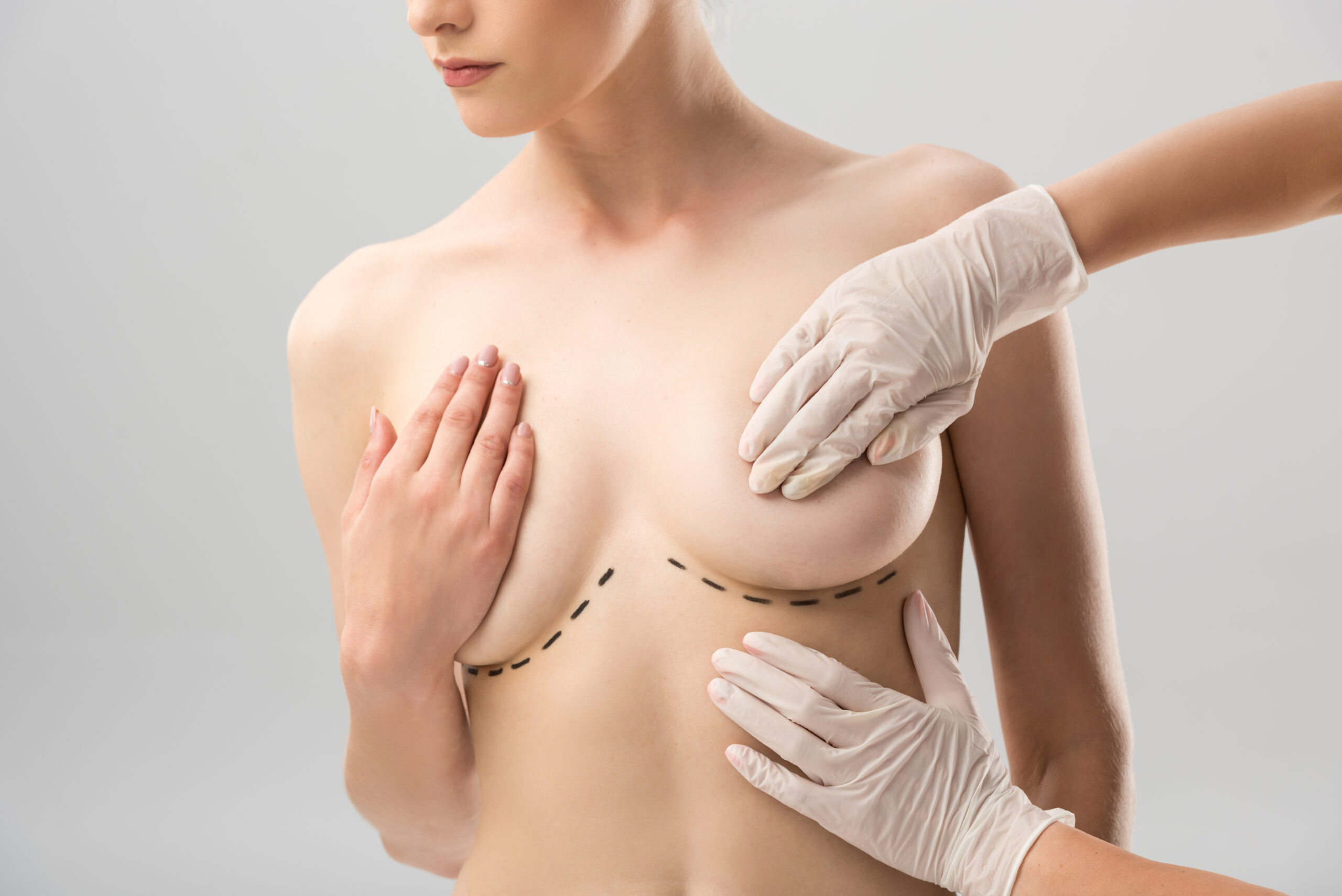
Breast reduction (reduction mammaplasty) removes excess gland, fat and skin, then reshapes the remaining breast so it sits higher and in better proportion to the frame. The nipple–areola complex is usually reduced and repositioned while kept attached to a blood-supply pedicle. If you want the surgical sequence in order, we have a separate step-by-step breakdown of the breast reduction procedure.

At Adnova Clinic, a specialist day-surgery centre near Southampton, the procedure is typically:
- Performed under general anaesthetic
- Around one and a half to two hours, depending on the amount of tissue and the incision pattern
- Day-case, so you go home the same day
- Planned without drains, with dissolvable sutures
The incision pattern is chosen according to the anatomy, not a one-size diagram. A breast uplift element is part of the reshape; others are comparing reduction with their wider breast surgery options. The aim is a breast that is lighter, sits better in a bra, and no longer dictates posture.
Guide pricing is on the breast treatment price list. Breast reduction is listed as a package guide, including garments and scar aftercare where indicated. The exact plan is confirmed after consultation, because the degree of reduction and any combined lift vary.
Male breast reduction: gland, fat, or both
Male breast reduction is not a smaller version of female reduction. The chest wall, nipple position and skin quality are different, and the mix of tissue matters.
Typical approaches at Adnova include:
- Vaserliposuction with Renuvion skin tightening.
- Occassionally direct excision of the firm gland behind the nipple.
- A combination of both
- A more extensive reduction when there is laxity after weight loss or for a very significant volume change.
Procedure time is usually one to two hours, again as day-case surgery under general anaesthetic. Return to desk work is often one to two weeks; gym work that loads the chest is delayed until the surgeon is satisfied, commonly around six weeks. Compression garments matter more than people expect they help swelling settle and support the new contour.
If you are searching for male breast reduction Southampton or male breast reduction Portsmouth, the useful first question is not “how small can you go?”. It is “what is this tissue?”. Gland occasionally needs excision; fat can be treated with liposuction. Assessing both is important to avoid a residual puffy nipple or contour irregularities.
Clothes, sport and posture: what usually changes after surgery
People rarely ask for a cup size in isolation. They ask to stop organising life around the chest. That is the same theme as our article on breast reduction for larger breasts: comfort and proportion, not a fashion size.
Clothes. After female reduction, shops start making sense again: a T-shirt hangs from the shoulders instead of tenting, a dress does not need a built-in shelf, and sports bras become sport rather than structural scaffolding. After male reduction, fitted shirts and swim shorts stop being a calculation.
Exercise. Heavy breasts make running, circuits and yoga uncomfortable; some women simply stop. Gynaecomastia makes men avoid anything that tightens across the chest. Once swelling has settled and clearance is given, the limitation is healing, not bounce or outline.
Posture. Reducing forward load does not instantly correct years of rounding, but it removes the reason the shoulders were compensating. Combined with sensible rehabilitation, many people stand differently because they no longer have to adjust.
Results are not instant. Swelling hides the final shape for weeks. Scars are real and need a year of care. Sensation can change, especially around the nipple. Breastfeeding after female reduction is possible for some women and not guaranteed; family plans are discussed in the consultation.
Southampton, Portsmouth, Winchester and Guildford
Adnova Clinic is based near Southampton. That is why searches for breast reduction surgery Southampton and Winchester breast reduction often lead here: the clinic is a dedicated day-surgery centre rather than a ward in a large hospital. Details and directions are on the clinic website.
Patients from Portsmouth usually have a short drive. Winchester is a straightforward journey. People looking for breast reduction surgery Guildford often travel for a consultant-led plan in a CQC-registered facility that performs this work regularly.
In practice, that means consultation and surgery on one site, same-day discharge for suitable patients, and follow-up that does not require an overnight stay.
Who is usually a candidate, and who should wait
A good candidate is in good general health, at a weight that is not rapidly changing, and clear about why they want surgery. Smoking is a problem for healing; most surgeons will ask you to stop around the time of the operation. Uncontrolled medical conditions need to be resolved before any procedure.
For women, persistent pain, strap grooving, recurrent under-breast rash, or breasts that dominate clothing and sport are the usual clinical picture. For men, a persistent often tender glandular component after puberty, or a chest that remains feminine in outline despite training, is the usual picture. See your GP first if the cause of gynaecomastia is unclear. Surgery treats the tissue; it does not treat an undiagnosed endocrine issue.
NHS funding for female reduction exists in some areas when strict criteria are met. Many people still choose private care because local thresholds or waiting times do not match the life they are trying to get back.
What the process looks like at Adnova
- Consultation. Assessment of tissue, skin, posture, goals and medical history. Book a consultation to go through technique and likely scar pattern honestly. Our guide to questions to ask during a surgical consultation is a useful starting point.
- Planning. Photographs, marking logic, and a written quotation from the breast fees list.
- Surgery. Day-case, general anaesthetic, no routine drains.
- Early recovery. Support garment, limited lifting, walking rather than complete rest. Desk work is often possible in one to two weeks.
- Later recovery. Swelling falls over weeks to months. Scars mature over 12-18 months.
Complications are uncommon but not fictional: bleeding, infection, delayed wound healing, asymmetry, changes in sensation, are some of the possible issues. Read the clinic terms before you book.
A note on expectation
Surgery can stop the chest dictating clothes, sport and posture. It cannot give you a body that never needs a well-fitting bra, a chest that looks airbrushed in every light, or a recovery with no scars. The useful test is functional: can you dress, train and stand without the chest being the first problem in the room?
If you are looking for breast reduction surgery in Southampton, male breast reduction in Southampton or Portsmouth, Winchester breast reduction, or breast reduction surgery in Guildford, the next step is a consultation that looks at your tissue, your health and the life you want the chest to stop interrupting.
Book a consultation or call 01489 539484.
This article is general information, not a personal medical recommendation. Suitability, technique and recovery are confirmed only after consultation.
Disclaimer: The prices listed in this article are for general guidance only and may be subject to change. For the most up-to-date and accurate pricing, please visit our face pricelist, body pricelist and breast pricelist.
< Blogs < When large breasts or gynaecomastia start to dictate clothes, exercise and posture
More Blogs